In fact, we could have a child node whose value appeared as a string while the same child node in the element would appear as a number. An XML schema is a document that specifies the type of value that each element of the corresponding XML document uses. This means that an XML schema must provide at least two pieces of information: the XML document that the schema refers to and the list of elements defined by the schema.
Like an XML file, an XML schema is a text-based document made of tags. You can start the document with a document type definition (DTD) that including encoding: <?xml version="1.0" encoding="utf-8"?> After that line, you will create the elements of the document. The first characteristic of an XML schema document is that it must specify a namespace. The namespace is defined in a document that specifies the types of values used in the document. As seen in our introduction to namespaces, you must decide about the prefix you will use in the various tags of the document. By convention, most people use either xs, which stands of XML Schema, or xsd, which stands for XML Schema Definition. Here is an example that uses xs: <?xml version="1.0" encoding="utf-8"?>
<xs>
As mentioned in our review of namespaces, the prefix must be followed by a colon and a name for the tag. In a typical XML schema, the first tag is named schema: <?xml version="1.0" encoding="utf-8"?>
<xs:schema>
As mentioned already, you must specify the namespace you will use. As mentioned in our study of namespaces, you create an attribute what uses xmlns as its prefix followed by a column and the prefix previously defined: <?xml version="1.0" encoding="utf-8"?>
<xs:schema xmlns:xs>
You must assign the URL of the namespace to that attribute. <?xml version="1.0" encoding="utf-8"?>
<xs:schema xmlns:xs="">
After creating the document, you should (must) save it and give it a name. An XML schema file has the extension .xsd.
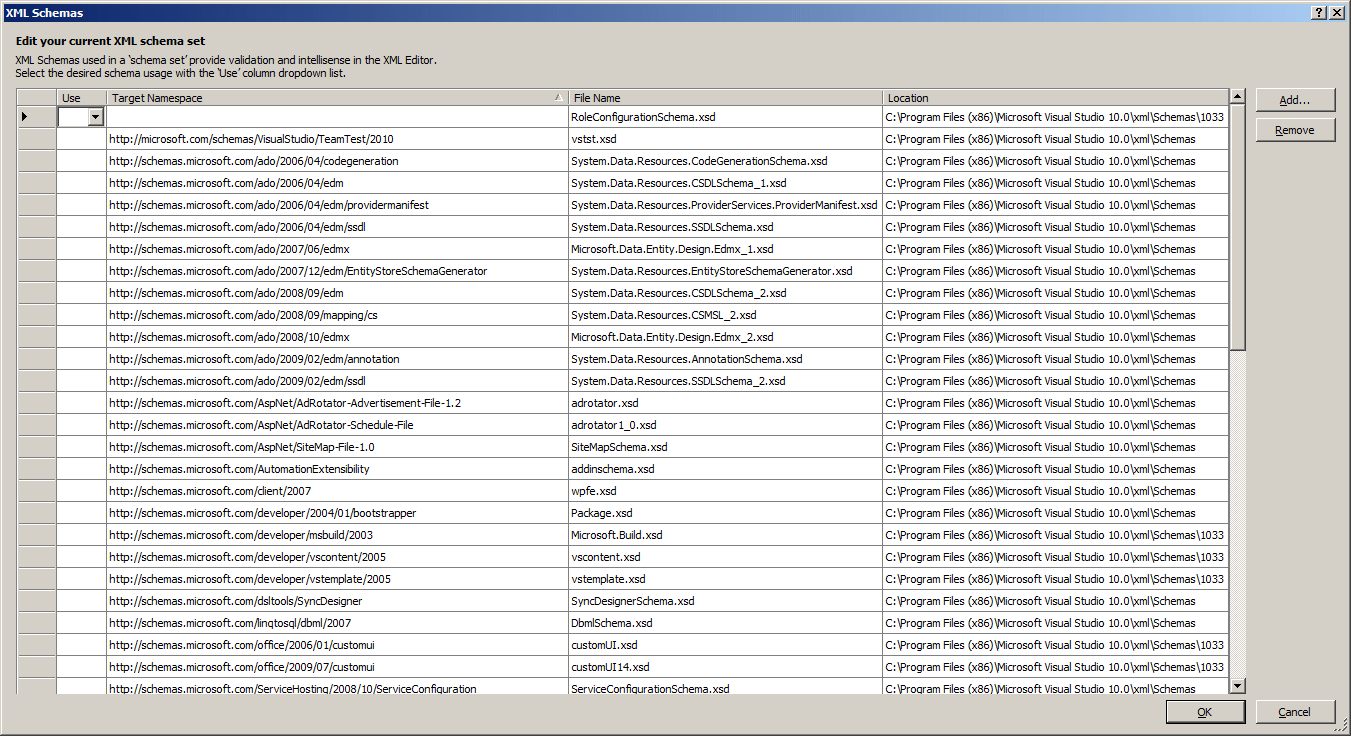
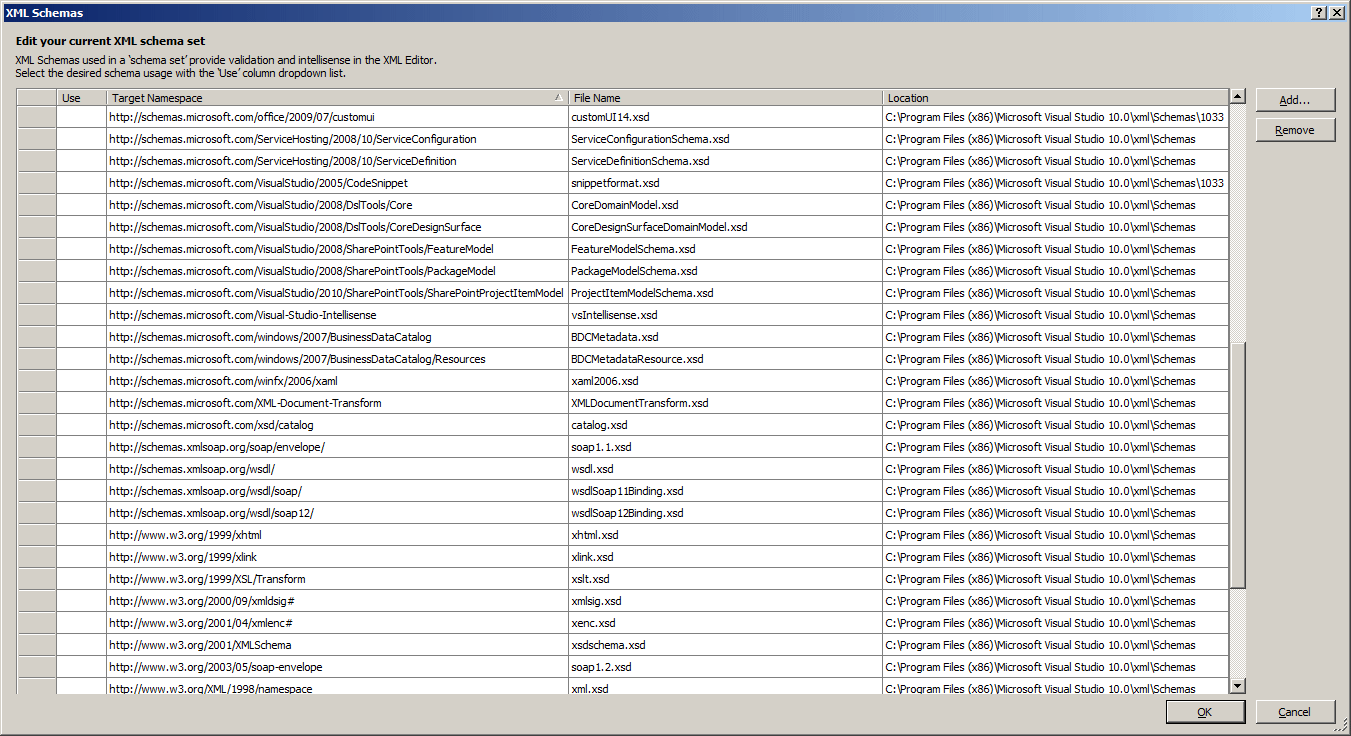
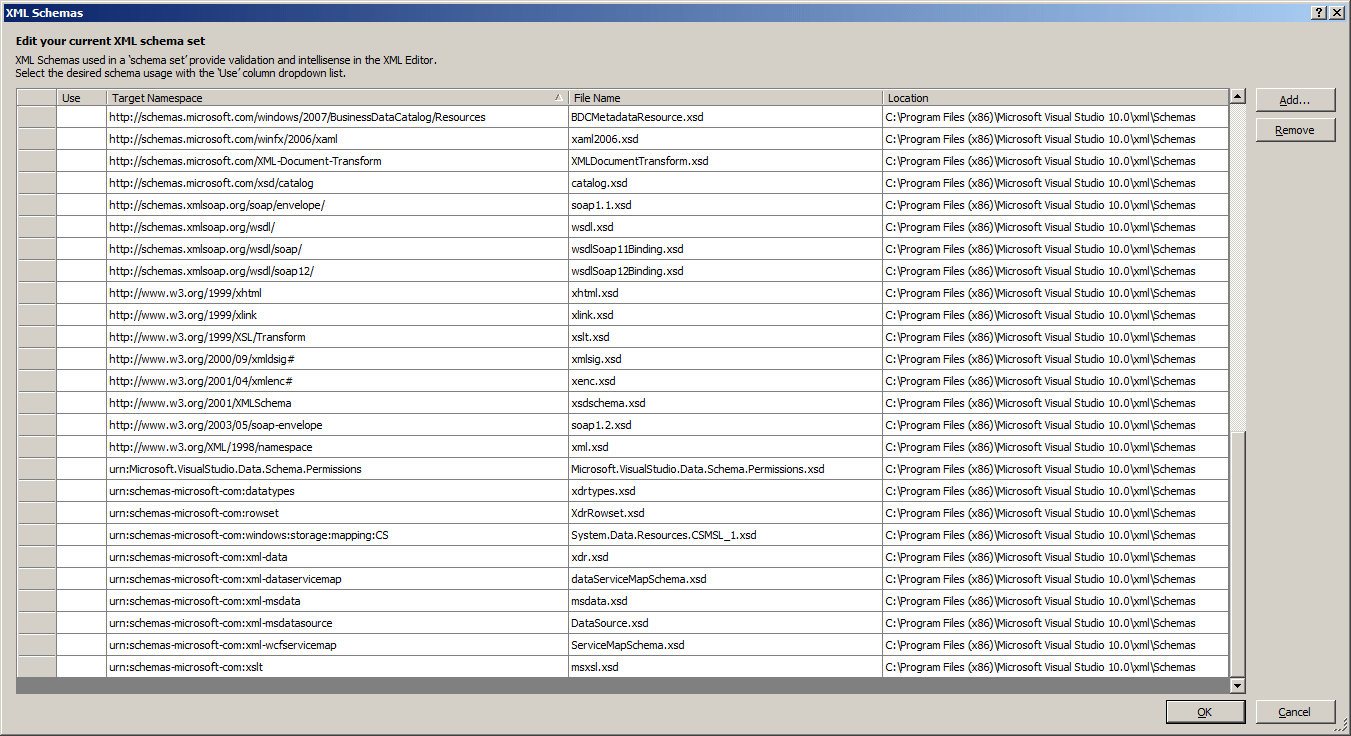
As mentioned already, the primary role of an XML schema is to define the types of values used in an XML document. There are various types of values that can be used in an XML document. Instead of defining your own types of values, many people and companies have already created XML schemas that you can simply use in your project. We refer to these as built-in XML schemas. Among others, both the W3C consortium and Microsoft have already created XML schemas you can use. To see a list of built-in XML schemas, if you are working in Microsoft Visual Studio, first create or open an XML file. On the main menu, click XML -> Schemas... This would open the XML Schemas dialog box
To use any of these schemas, assign it to your xmlns:Prefix attribute. Here is an example: <?xml version="1.0" encoding="utf-8"?>
<xs:schema xmlns:xs="http://www.w3.org/2001/XMLSchema">
You can use one of the built-in schemas of the XML Schemas dialog box. You can also use more than namespace. To do this, create one schema tag and add each desired namespace. Here is an example: <?xml version="1.0" encoding="utf-8"?>
<xs:schema xmlns:xs="http://www.w3.org/2001/XMLSchema"
xmlns:xs="http://www.w3.org/XML/1998/namespace"
xmlns:xs="http://schemas.microsoft.com/xsd/catalog">
Notice that, in the XML Schemas dialog box, you can add a new one by clicking Add, locating, and then selecting the file.
Consider the following XML document: <?xml version="1.0" encoding="utf-8"?> <video /> As mentioned already, to create its corresponding XML schema, start a text-based document that contains a DTD and a tag that specifies the foundational namespace. Of course, this tag must be closed. Here is an example: <?xml version="1.0" encoding="utf-8"?> <xs:schema xmlns:xs="http://www.w3.org/2001/XMLSchema"> </xs:schema> Between the start and the end tags, you must specify the necessary tag. Since the schema is tied to the XML tag, it must include a tag for each of the XML elements. Each tag must start with the prefix, a column, and the keyword element. This would be done as follows: <?xml version="1.0" encoding="utf-8"?>
<xs:schema xmlns:xs="http://www.w3.org/2001/XMLSchema">
<xs:element ... >
</xs:schema>
To indicate what element the tag is referring to, you use name="" and, in the quotes, insert the name of the element from the XML document. Here is an example: <?xml version="1.0" encoding="utf-8"?>
<xs:schema xmlns:xs="http://www.w3.org/2001/XMLSchema">
<xs:element name="video">
</xs:schema>
As seen in our introductions to XML, you must close the tag and you have two options:
In programming languages, a data type is a word or a group of words that indicates the amount of computer memory necessary to store a certain value or a certain kind of value. A value can be considered as a character, a group of characters (also called a string), a number, a date, etc. In XML, these are referred to as simple types. Consider the following XML document: <?xml version="1.0" encoding="utf-8" ?> <video>The Distinguished Gentleman</video> Notice that it contains only one element, that element has a value, and it does not have any child node. One of the rules of simple types is that their correspond node cannot have a child element. In the same way, an element of simple type cannot have an attribute. Instead of defining your own simple types, you can use a built-in schema that already has the definitions you will need and you can simply use its data types. To specify the data type used by an element, in the XML schema and in the start-tag of the element, create an attribute whose name is type. Assign a string that contains the name of the prefix, followed by a colon, and followed by the data type. This would be done as follows: <?xml version="1.0" encoding="utf-8"?>
<xs:schema xmlns:xs="http://www.w3.org/2001/XMLSchema">
<xs:element name="video" type="xs:DataType">
</xs:element>
</xs:schema>
As mentioned already, a data type is primarily represented by a name but it may also have some internal characteristics that express how the data type functions. A number is referred to as signed if it can be represented with a leading sign as + or -, which means the number can be positive (from 0 up) or negative (from 0 down). When no leading sign is used, the number is considered positive. A number is reffered to as unsigned if it is positive. The most common data types used for values of XML elements are:
If none of the built-in types suits you, you can create your own.
Consider the following XML document: <?xml version="1.0" encoding="utf-8" ?>
<video>
<title>The Distinguished Gentleman</title>
<director>Jonathan Lynn</director>
</video>
Notice that the video element has two child elements named title and director. When an XML element has a child element, that parent is said to have a complex type. In your XML schema, to create a tag for a parent element, create a tag named complexType and close it. This would be done as follows: <?xml version="1.0" encoding="utf-8"?>
<xs:schema xmlns:xs="http://www.w3.org/2001/XMLSchema">
<xs:element name="video">
<xs:complexType></xs:complexType>
</xs:element>
</xs:schema>
Between the start and end-tags of the complex type, you will create the tag(s) for the child element. But first, you must indicate that you are about to specify the order of the child elements. This is done by creating a tag named sequence. This can be done as follows: <?xml version="1.0" encoding="utf-8"?>
<xs:schema xmlns:xs="http://www.w3.org/2001/XMLSchema">
<xs:element name="video">
<xs:complexType>
<xs:sequence>
</xs:sequence>
</xs:complexType>
</xs:element>
</xs:schema>
Remember that a parent element can have a value. Here is an example: <?xml version="1.0" encoding="utf-8" ?>
<video>The Distinguished Gentleman
<director>Jonathan Lynn</director>
</video>
When create a schema for the element, add a name flag and assign the name of the element to it. Here is an example: <?xml version="1.0" encoding="utf-8"?>
<xs:schema xmlns:xs="http://www.w3.org/2001/XMLSchema">
<xs:element name="video">
<xs:complexType>
<xs:sequence name="video">
</xs:sequence>
</xs:complexType>
</xs:element>
</xs:schema>
Between the start and the end tags of the sequence, create a simple type tag for each child element of the corresponding complex tag. Here is an example: <?xml version="1.0" encoding="utf-8"?>
<xs:schema xmlns:xs="http://www.w3.org/2001/XMLSchema">
<xs:element name="video">
<xs:complexType>
<xs:sequence>
<xs:element name="title" type="xs:string" />
<xs:element name="director" type="xs:string" />
</xs:sequence>
</xs:complexType>
</xs:element>
</xs:schema>
The sequence tag indicates in what order the tag should appear in the XML document. Consider the following XML document: <?xml version="1.0" encoding="utf-8" ?>
<videos>
<video>
<title>The Distinguished Gentleman</title>
<director>Jonathan Lynn</director>
<length>112</length>
<rating>R</rating>
<widescreen>true</widescreen>
</video>
<video>
<title>Godzilla</title>
<director>Roland Emmerich</director>
<length>139</length>
<rating>PG-13</rating>
</video>
</videos>
From what we have learned so far (namespaces, prefixes, the schema keyword, the element keyword, the complexType keyword, and the sequence keyword), it schema document can be created as follows: <?xml version="1.0" encoding="utf-8"?>
<xs:schema xmlns:xs="http://www.w3.org/2001/XMLSchema">
<xs:element name="videos">
<xs:complexType>
<xs:sequence>
<xs:element name="video">
<xs:complexType>
<xs:sequence>
<xs:element name="title" type="xs:string" />
<xs:element name="director" type="xs:string" />
<xs:element name="length" type="xs:unsignedInt" />
<xs:element name="rating" type="xs:string" />
<xs:element name="widescreen" type="xs:boolean" />
</xs:sequence>
</xs:complexType>
</xs:element>
</xs:sequence>
</xs:complexType>
</xs:element>
</xs:schema>
Now consider the following XML document: <?xml version="1.0" encoding="utf-8" ?>
<videos>
<video>
<title>The Distinguished Gentleman</title>
<director>Jonathan Lynn</director>
<length>112</length>
<actors>
<actor>Eddie Murphy</actor>
<actor>Lane Smith</actor>
<actor>Sheryl Lee Ralph</actor>
</actors>
<rating>R</rating>
<widescreen>false</widescreen>
</video>
<video>
<title>Godzilla</title>
<director>Roland Emmerich</director>
<length>139</length>
<actors>
<actor>Matthew Broderick</actor>
<actor>Jean Reno</actor>
</actors>
<rating>PG-13</rating>
<widescreen>true</widescreen>
</video>
</videos>
Notice that the actors element, which is nested in the video element, has children elements of its own. For any node that has at least one child node, create a complexType start-tag and close it. Inside this complex type, create a sequence start-tag and close it. Inside the new sequence tag, create an element tag for each child element and specify its data type. Here is an example: <?xml version="1.0" encoding="utf-8"?>
<xs:schema xmlns:xs="http://www.w3.org/2001/XMLSchema">
<xs:element name="videos">
<xs:complexType>
<xs:sequence>
<xs:element name="video">
<xs:complexType>
<xs:sequence>
<xs:element name="title" type="xs:string" />
<xs:element name="director" type="xs:string" />
<xs:element name="length" type="xs:unsignedByte" />
<xs:element name="actors">
<xs:complexType>
<xs:sequence>
<xs:element name="actor" type="xs:string" />
</xs:sequence>
</xs:complexType>
</xs:element>
<xs:element name="rating" type="xs:string" />
<xs:element name="widescreen" type="xs:boolean" />
</xs:sequence>
</xs:complexType>
</xs:element>
</xs:sequence>
</xs:complexType>
</xs:element>
</xs:schema>
As you are aware already, an XML element can have one or more attributes. Here is an example: <?xml version="1.0" encoding="utf-8" ?>
<video title="The Distinguished Gentleman" />
As you should know already, once an element has an attribute, it is said to have a complex type. Therefore, before creating a schema tag for the attribute, you must first create a complex parent type. Then create a child tag. Instead of the element keyword, use attribute. Here is an example: <?xml version="1.0" encoding="utf-8"?>
<xs:schema xmlns:xs="http://www.w3.org/2001/XMLSchema">
<xs:element name="video">
<xs:complexType>
<xs:attribute name="title" type="xs:string">
</xs:complexType>
</xs:element>
</xs:schema>
In the same way, if a child element has an attribute, first create a complexType start-tag for it and close it. Inside this complex type, create a sequence start-tag and close it. Inside the new sequence tag, create an attribute tag for each attribute and specify its data type. |
|
|||||||||||||||||||||||||
|
|
||||||||||||||||||||||||||